Minc Game launches with six promising companies
%20(1000%20x%20500%20px)-2.png)
Malmö’s new game program has kicked off, and it did so with a masterclass by international indie game expert Jason Della Rocca. Now the participating companies are chasing the shared goal: To build the next world-class game from Malmö.
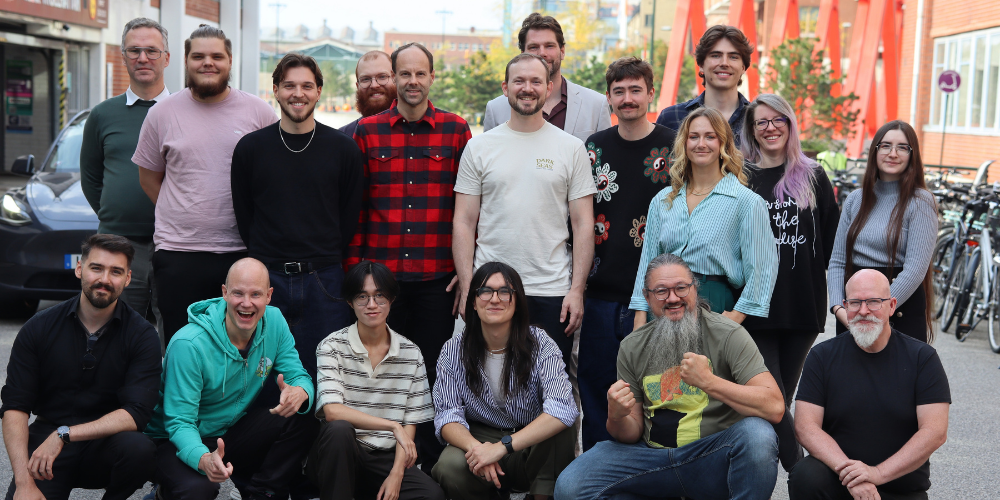
Minc Game kicked off on September 1 with a masterclass from international indie game expert Jason Della Rocca. As with a lot of the Minc Game content, the masterclass was open to everyone in the game development community. However, the follow-up workshops after the open talks are exclusive to the Minc Game company participants.
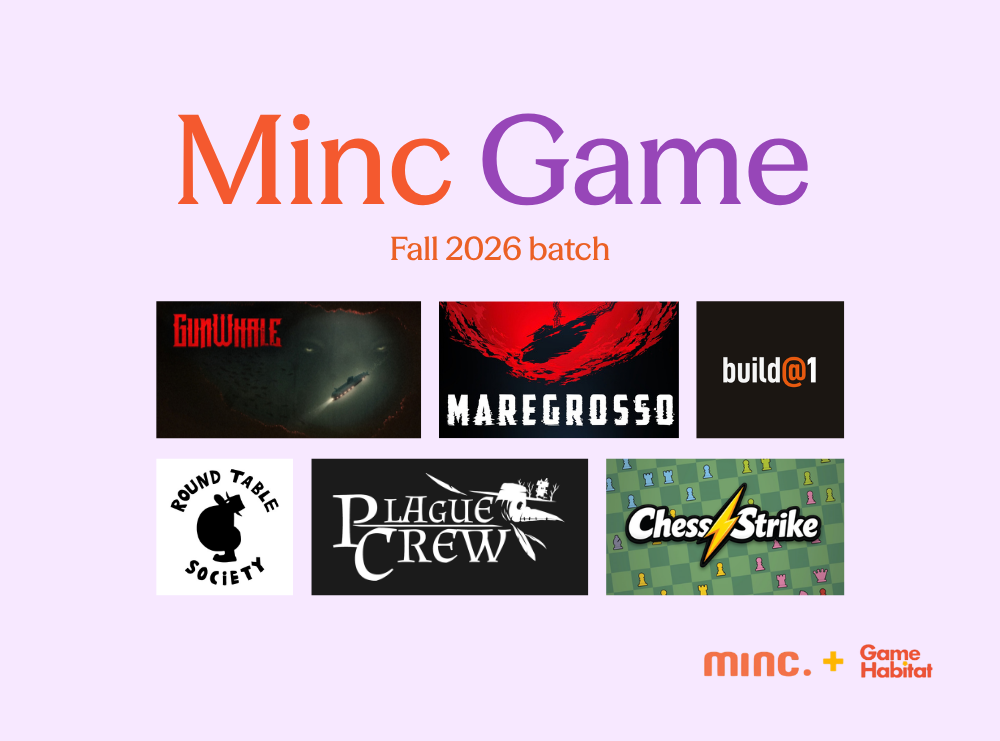
The companies in the first Minc Game batch are Round Table Society, Flotsam Interactive, Bricks and Balls, Deleted Cookie, Playtrigger Games, and Build at One.
The companies are all at a similar stage of development, which means they can also learn from one another along the way, making the program even more relevant for all the companies. For the program, we wanted companies we believe can become ready to pitch to publishers or investors, or to self-publish, by the end of the program. That is a high bar, and it's meant to be. We expect a lot from these companies, and they should expect a lot from us,
says Renée Jessen, Portfolio Lead Games at Minc.
Developing ambitious games
The six Minc Game companies are currently all hard at work developing ambitious games. Some of the companies have been in the industry for a few years, some are newly founded. Most of the companies’ staff members have at least a few years of experience in the games industry, for instance from established companies such as Massive Entertainment, Sharkmob, Thunderful, and EB Studio. All of the companies in the Minc Game program are building ambitious games that have a chance to become significant successes.
Learn more about the games the companies are currently developing:
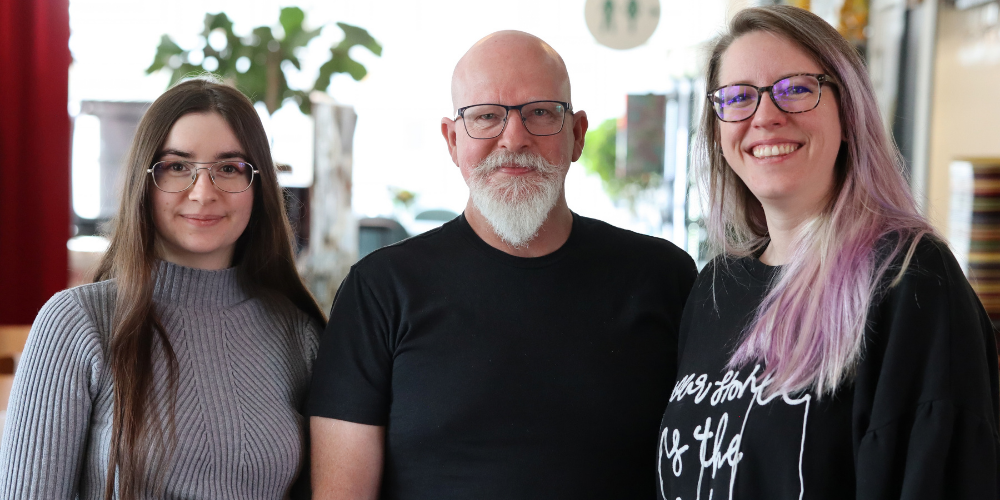
Cold at Dawn
by Round Table Society
In Cold at Dawn, vampire clans huddle around a dying CryoTower, racing to survive a scorching desert apocalypse. Players build, research and make brutal calls to keep rival clans from tearing the colony apart before the sun does.
Round Table Society is a small independent game studio of four core developers with more than 20 years of combined industry experience. The team has worked at leading studios across every key discipline, and includes alumni of The Game Assembly, Future Games and DAE (Digital Arts and Entertainment). They're currently making Cold At Dawn, a punishing vampire city-builder survival game set in the desert ruins of a fallen civilization.
Players build a settlement around a CryoTower full of frozen humans, keep rival vampire clans in check, and make harsh moral choices to survive the rising heat.
A playable demo is out now, and the studio is working toward a beta in 2027.
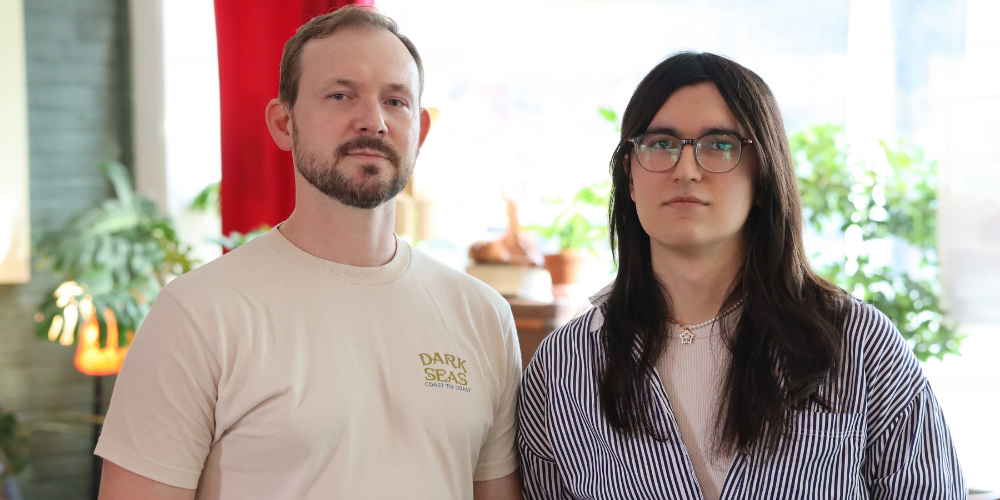
Maregrosso
By Flotsam Interactive
Maregrosso brings the Sicilian swordfishing tradition to life in an asymmetric co-op horror game where trust (and nerve) keeps you alive in the deep. The game is available on Steam now.
Flotsam Interactive is a small indie studio founded by three industry veterans. Programmer and designer Jo Colomban comes from Sunscorched Studios. Artist Anneli Gårde was previously a character artist at Massive Entertainment. Sound designer Adam Ritchie was a senior voice designer at Massive Entertainment and a dialogue supervisor at Lionhead Studios.
Their debut game, MAREGROSSO, is an asymmetric co-op horror fishing game. It's inspired by the centuries-old swordfishing tradition of Messina, Sicily, where fishers use a distinctive boat with a tall lookout mast. Two players crew the boat together, and each can only do half the job:
- The Spotter sees the swordfish and the obstacles in the water, and is vulnerable to mental damage.
- The Fisher steers and throws the spear, even though they can't see what's out there, and is vulnerable to physical damage.
Each night, the crew has to talk each other through the hunt, meet their catch quota and make it back to port alive. As the nights go on, eldritch creatures rise from the deep. When a player loses their sanity, they start seeing horrors, so even a bad night makes for a memorable one.
More about Maregrosso
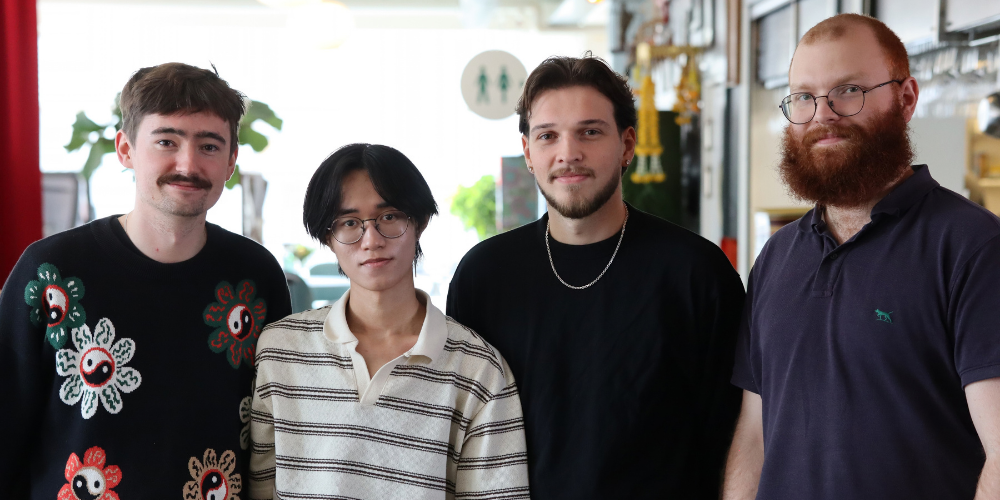
Gunwhale
By Bricks and Balls
Gunwhale is a 2–4 player co-op experience where you and your crew pilot a submersible through monster-infested deep-sea waters. Take on missions, work interactive control panels together and discover what lurks below. It's made for simulator fans who like a bit of survival horror in the mix.
Bricks and Balls is a new studio founded by four FutureGames students. During their internship at Tarsier Studios, they got the chance to start work on their first game of their own: Gunwhale.
Gunwhale is a co-op game for 2–4 players. You and your crew pilot a submersible through the monster-infested waters of an alien ocean. You take on missions, work the sub's control panels together and find out what lurks below. It's made for simulator fans who like some survival horror in the mix.
At first glance, Gunwhale might look like just another "friendslop" game, one of the many chaotic co-op titles made to be played with friends. The team is aiming much higher. Every lever in the sub has a real mechanical effect, so the crew has to work together to steer, read the sonar and keep the engine running. Games with realistic submarine controls usually end up as war simulators. Gunwhale puts those controls into a fantasy setting instead: a retro-futuristic world with a Cold War feel and Lovecraftian creatures in the dark. The result is a tense, challenging co-op game where your crew is small, the ocean is huge and you never quite know what's out there.
More about the company

Plague Crew
By Deleted Cookie
Plague Crew is a 1–4 player co-op horror-comedy where you play tiny plague doctors roaming infected medieval villages. Investigate symptoms, craft questionable cures and survive whatever happens when your "treatment" backfires. Think Lethal Company meets R.E.P.O., but with leeches.
Deleted Cookie is an indie studio with a clear motto: small games, big personality. Its team includes former The Station/Thunderful developers who worked on games like SteamWorld Build, Islanders: New Shores and Wavetale. The studio has already released titles such as the puzzle game Garden Sprites and the cozy Steam adventure Tiny Space Pirate, and more mobile games are on the way.
Its next and biggest project is Plague Crew, now in development. The tagline is "The plague is the easy part." It's a first-person co-op survival game that mixes medieval horror with absurd comedy. A witch summons players as tiny plague doctors who travel between infected villages. They diagnose diseases, brew medicine in a shared cauldron that may or may not work, and sometimes amputate a limb. If you treat the wrong villager first, the sickness spreads.
The studio is targeting an Early Access launch in March 2027 and a full release in July 2027. If you enjoy dark humor, co-op mayhem and doctors who don't quite know what they're doing, keep an eye on Plague Crew.
More about Plague Crew
More about the company
Chess Strike
By Playtrigger Games
Chess Strike reinvents competitive chess as a multiplayer skirmish. The rules feel familiar, but the goal is new: be the last player standing.
Playtrigger started as a consultancy and is now becoming a game studio. As well as Minc's 5-month Game incubator, the team is in the HETCH AI startup accelerator.
You can try it at play.chess-strike.com.
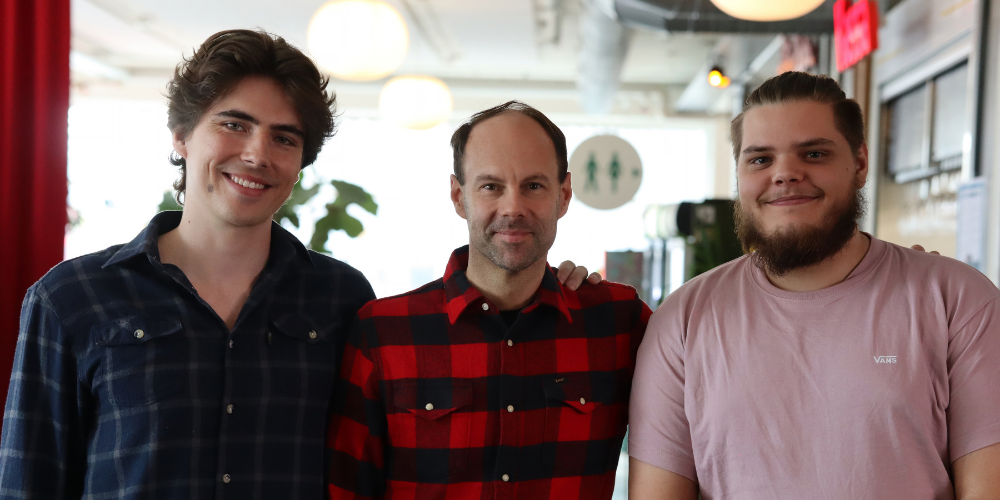
The team behind Playtrigger is Anders Rundqvist: business, development and game design; Adrian Ågren: game development and game design; Henric Björkenhall: player experience and community.
Chess Strike: what if chess were designed today?
Chess is no longer something people only play. It gets watched, streamed, discussed and turned into content. But even with huge online audiences, the game itself is still one person against one other person. Playtrigger wants to change that.
Their answer is Chess Strike, "chess meets Battle Royale." It's a multiplayer strategy game played on an infinite chessboard, where you work with other players or betray them to grow your army and take over the board. The idea is to bring players, spectators, streamers and creators together in one shared multiplayer experience.
Chess Strike is aimed at chess and strategy players who want a competitive, social game with friends and new opponents. It's being built for web, desktop and mobile. The game is now in alpha playtesting. The first release lets you play against bots, the second adds play against other people, and a full launch is planned for December 2026.
More about Chess Strike
More about the company
Standard Procedure
By Build at One
Standard Procedure is a co-op espionage game where you and your friends take on the government's dirtiest jobs, earning cash and racing to clear your debt before time runs out. It blends the hangout vibe of RV There Yet with the mission-based progression of Backrooms: Escape Together, for a mix of teamwork and emergent chaos.
Build at one is the small independent studio behind Standard Procedure, and it's both developing and self-publishing the game. The team calls itself "a small team that moves fast," and plans to build the game in the open with its players. It'll share dev updates, run polls and gather feedback on Discord, and says Early Access bug reports and balance feedback will shape what it works on next.
Standard Procedure is a co-op espionage game for 1–4 players with a noir look and a dark sense of humour. You and your friends are government agents who do the dirty work and don't ask questions. Jobs include breaking into foreign embassies, bugging homes, stealing valuable artifacts and cleaning up crime scenes, all without leaving anyone implicated.
Mission briefs arrive by pneumatic tube. Every job pays, and you have to clear your debt before time runs out. Between assignments you can hang around the office, where you can smoke, drink, bother your colleagues or play with the typewriter. Proximity voice chat lets you coordinate with your team, or not. There's also a range of gear and consumables, "some tactical, some less so," and character customization. The game is set to come to Steam Early Access in Q1 2027
Business and creative
As part of the Minc Game program, the companies will take part in masterclasses, workshops, and one-on-one sessions with experienced founders and industry experts. The program covers both the business side of game development, and the craft of making games.
International games industry experts such as Jason Della Rocca, and Rami Ismail, as well as regional industry leaders such as Andreas Johnsson, Co-founder and Creative Director at Tarsier Studios, and Astrid Refstrup, CEO at Wings Interactive, are among the program’s guest speakers.
The program is designed to support and lift the participants’ learning and development so that they can move faster, with better results. Our aim is to have the companies leave the program with a clear business plan, ready to take in capital, and with enough momentum to carry them forward to their next big milestone.
says Jesper Krogh Kristiansen, Business & Growth Manager at Game Habitat.
The Minc Game program concludes in January.
The Minc Game program
Minc Game is Malmö’s program for game development companies. The program provides participating companies based in South Sweden with tools and training to launch or scale their business, and to create world-class games and game-related products. Minc Game is run by Minc and Game Habitat and supported by the City of Malmö.
When the first Minc Game batch concludes in January, additional programs will follow in the new year. Alongside the first Minc game program batch, a pilot where individual game developers looking to form new companies have been running, find more about that work and the results here.
About Minc
Minc is Malmö's leading growth engine and the driving force behind Southern Sweden's innovation economy. Home to Fast Track Malmö, Skåne Ventures, and a portfolio spanning more than 40 nationalities, Minc has turned some of the region's most ambitious founders into world-class companies. Founded in 2002 and owned by the City of Malmö. minc.se
Related Posts
Minc Game launches with six promising companies
Six teams, six games and one shared goal: to build the next world-class game from Malmö. On September 1, Minc Game Level 1 kicked off with a masterclass from industry veteran Jason Della Rocca. It was also day one for the six game development companies selected for the Minc Game fall 2026 program.
Learn more
First Level 0 group graduates
Four weeks ago, 16 game developers walked into Minc without a team. Today they pitched to a panel of industry people.
Learn more
DBtune: Automating Databases with Trust and Impact
When it comes to enterprise databases, the work is still surprisingly manual. Performance tuning requires experts, time, and constant attention. Many companies compensate by overprovisioning hardware, which is expensive and inefficient. DBtune is changing that. We sat down with founder Luigi Nardi to hear how the company uses AI to automate tuning without compromising trust.
Learn more