Imvi Labs uses VR to improve reading speed

The reading problem nobody is screening for
Up to 80% of poor readers have an undiagnosed vision problem. Not blurry eyesight — a coordination issue between two healthy eyes and the brain. It rarely shows up in a standard eye exam, and almost no teacher is trained to spot it. Imvi Labs built a way to find it, and fix it, at scale.
The problem hides in plain sight
When the eyes and brain don’t coordinate, even slightly, text won’t sit still. It blurs, doubles and drifts. The brain burns extra energy forcing the image straight, and after five to ten minutes it runs out. That’s the kid staring out the window twenty minutes into silent reading.
Classroom studies at Karolinska Institutet found signs of eye coordination problems in 29 to 45% of children. Older literature usually cites around 10%. Among struggling readers, the figure rises to as many as 80%. Even 30 to 50% of strong readers have a mild version. They just hide it well.
The reason it goes undiagnosed is structural, not personal. An optician’s exam takes a few minutes, but the problem often only shows after 10 to 20 minutes of reading. You won’t catch it in a clinic chair. You’ll catch it in a classroom, and classrooms aren’t set up to look.
Three founders with strong expertise
Imvi Labs has three founders:
- Rune Brautaset, a Karolinska Institutet professor with 25 to 30 years in optometry research
- Michael Malmqvist, CTO
- Peter Carlsson, who brought 25 years of corporate business experience
The idea came from Malmqvist’s own life. His close friend read through school without trouble. At university she suddenly couldn’t keep up. She was told it might be dyslexia, possibly ADHD, but it was neither. She got the standard fix, pencil push-up training, and quit after three days. This is what prompted the idea for a better solution, and Malmqvist found a team with the right expertise to act on it.
Why VR — and why it works better than the pencil
Traditional vision therapy works. What fails is getting people to keep doing it. Moving a pencil back and forth is slow and dull, and it usually needs an adult watching every session. One Wisconsin school district ran this kind of training for eight years. It cost about $5,000 per student in today’s money, before counting the kids who quit.
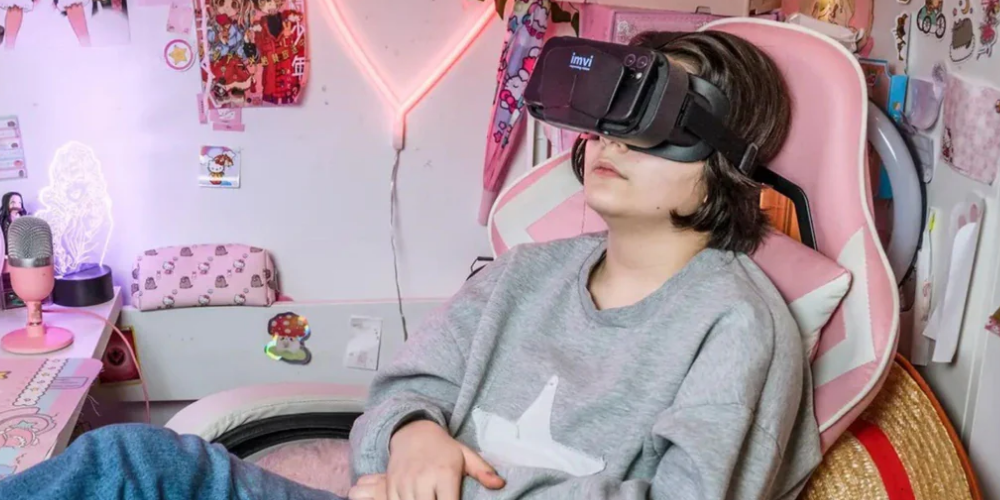
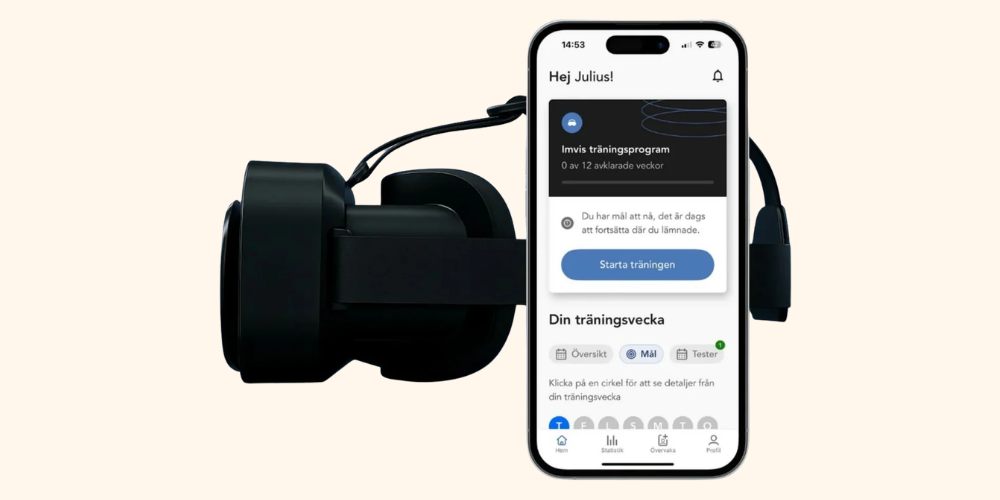
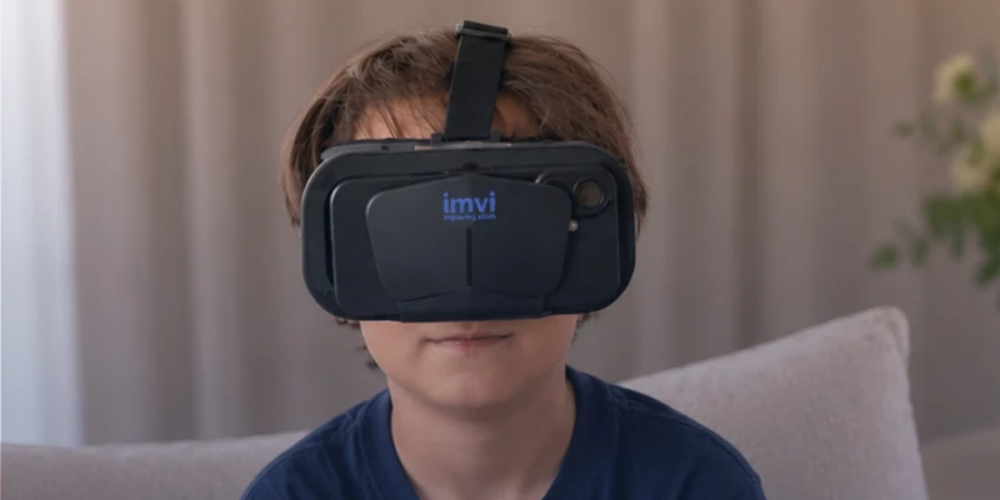
Imvi’s VR headset controls what each eye sees while you watch content you actually like, such as YouTube or Binogi. The eyes still do the work. The brain just stays interested. That’s the difference between a routine you stick with and one you drop on day three.
There are two versions. Imvi is for schools and home users. Imvi Pro is for opticians and has individual settings for each eye.
What it looks like when it works
Imvi has trained more than 4,000 people, aged 5 to 93. Three in four improve their reading. One in three more than doubles their reading speed.
Some of the people behind the numbers:
- A woman in her late 60s had double vision after a stroke and was told nothing more could be done. Eighteen months after starting Imvi, she was driving again.
- A former hockey player with several teenage concussions read three books at 65, his first since he was a teenager.
- A seventh grader with ADHD and dyslexia had straight F’s before winter break and no failing grades the next semester.
- An 11-year-old in Tokyo who had never finished a book read her first one.
Built for schools, scaling from Malmö
Schools are currently the main customer. A typical school starts with a 12-week pilot with 5 to 10 students, and most schools continue training after the pilot. Private users buy online in the US and Europe, and opticians sell Imvi Pro in Sweden, Norway and Estonia.
The new money goes into schools in Sweden and Finland, growth in Norway and a bigger launch in Japan. School research with Helsinki University and pilots in Japan are already running.
Minc from year one
“Minc was critical for us in our first year. I had never been part of a startup from day one, and suddenly I was setting up a company. In the incubator I learned how to pitch and how to build a company. We had a lot of help.
The incubator was fantastic. It had a structured program, and apart from the coaching, there was the network: other founders in the incubator, and people who had exited and were running companies on their own.”
-Peter Carlsson, CEO at Imvi Labs
A problem affecting up to 80% of struggling readers, invisible to a standard eye test — and a Malmö-built fix for it, now training people from age 5 to 93 across three continents. That's what it looks like when Minc's ecosystem builds for the world.
About Imvi Labs
Imvi Labs builds VR-based vision training for a reading problem that standard eye exams miss: two healthy eyes that don’t coordinate with the brain. Users train while watching content they choose, such as YouTube or Binogi. The company was founded by a Karolinska Institutet optometry researcher and two co-founders, and it has trained more than 4,000 people aged 5 to 93. Imvi sells to schools and home users, and Imvi Pro is sold through opticians in Sweden, Norway and Estonia. Imvi Labs is based in Malmö and has been part of Minc since 2021.
About Minc
Minc is Malmö's leading growth engine and the driving force behind Southern Sweden's innovation economy. Home to Fast Track Malmö, Skåne Ventures, and a portfolio spanning more than 40 nationalities, Minc has turned some of the region's most ambitious founders into world-class companies. Founded in 2002 and owned by the City of Malmö. minc.se
Related Posts

Minc Impact: Creating better societies
Impact startups aren't charity projects. They are companies that solve real problems for people, society and the environment, and grow by doing it.
Learn more
Imvi Labs uses VR to improve reading speed
Up to 80% of poor readers have an undiagnosed vision problem. Not blurry eyesight — a coordination issue between two healthy eyes and the brain. It rarely shows up in a standard eye exam, and almost no teacher is trained to spot it. Imvi Labs built a way to find it, and fix it, at scale.
Learn more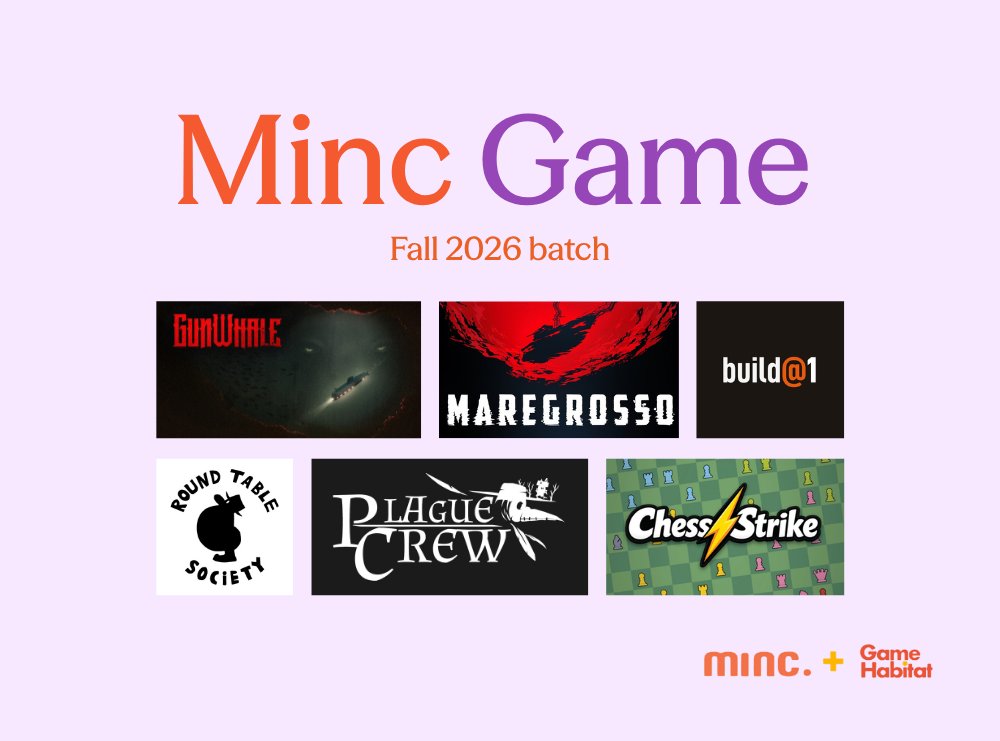
Minc Game launches with six promising companies
Six teams, six games and one shared goal: to build the next world-class game from Malmö. On September 1, Minc Game Level 1 kicked off with a masterclass from industry veteran Jason Della Rocca. It was also day one for the six game development companies selected for the Minc Game fall 2026 program.
Learn more